
 Our Work
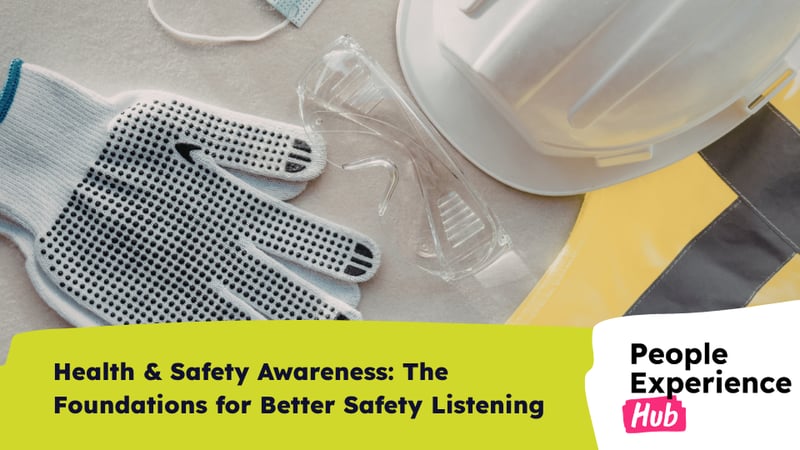
TL;DR: Health & Safety Awareness Day is an opportunity for organisations to reflect on how they create safe, confident, and supportive working environments. This article explores the core themes behind effective health and safety practice, consultation, physical risk awareness, psychosocial safety, reporting confidence, training, and everyday behaviour.
If you want to turn these principles into a practical listening tool, you can download our Health & Safety Pulse Survey Template
Why This Awareness Day Matters
The ILO’s World Day for Safety and Health at Work highlights the ongoing importance of prevention, risk management, and building resilient safety systems. Their 2026 focus reinforces a simple truth: strong health and safety practices aren’t fixed, they evolve through culture, communication, and everyday behaviour.
Health and Safety Awareness Day is therefore more than a calendar moment. It’s a prompt to pause, take stock, and understand where confidence, clarity, and engagement with safety might need strengthening. It also creates the perfect moment to bring helpful guidance together, which is why this blog and the accompanying pulse survey template were developed: to give teams a clear, practical starting point for listening to employees and improving safety culture.
1. Consultation: The Foundation of Trust and Awareness
Employees should never be passive recipients of health and safety decisions. They need to feel included, listened to, and able to influence discussions about the risks that affect their day-to-day work.
Meaningful consultation helps organisations understand whether people:
- Feel informed about changes
- Have opportunities to share concerns
- Believe their safety is taken seriously
These aren’t just compliance expectations…they shape culture. When people feel involved, they’re more engaged, more proactive, and more confident in raising issues.
2. Practical Physical Safety: What People Need to Know
No employee needs to memorise legislation. But they should feel clear and confident about the basics that keep workplaces safe, such as:
- Recognising local risks
- Knowing what to do in an emergency
- Understanding how to use equipment safely
- Spotting and acting on everyday hazards
- Knowing who to speak to when something isn’t right
These fundamentals form the backbone of physical safety culture and help organisations understand whether people feel grounded and prepared.
3. Psychosocial Safety: A Growing Priority
Psychosocial safety is increasingly recognised as part of core health and safety obligations. Regulators now classify work-related stress, anxiety, and mental ill-health as hazards that must be assessed and controlled.
Key influences include:
- Workload and pace
- Autonomy and clarity
- Support from managers and peers
- Healthy team relationships
- How well organisational change is handled
Crucially, psychosocial safety is about work design and culture, not diagnosing individuals. When these foundations falter, risk increases, not just for wellbeing, but for performance and safety behaviours too.
4. Reporting: Confidence, Safety and Action
A reporting process only works when people feel genuinely able to use it. Employees need to know how to raise a concern, trust that it will be taken seriously, and feel safe doing so without fear of negative consequences. When any of these elements are missing, risks tend to go unreported, not because they aren’t visible, but because people don’t believe speaking up will lead to change.
That’s where anonymous channels play an important role. One of our products, YourSay, our always on feedback channel, gives people a way to raise anonymous health and safety concerns in the moment, in their own words, without having to put their name to it. When employees believe their feedback will be acted on, and they have a clear, anonymous route to share it, organisations are far more likely to surface issues early and take meaningful action.
5. Training & Awareness: What’s Reasonable to Expect
It’s not enough to deliver training; employees need to feel that training is relevant, understandable, and accessible. Organisations benefit from understanding whether people:
- Know what’s required of them
- Can access guidance when needed
- Feel the training they’ve received actually helps them stay safe
This isn’t about assessing competence, it’s about recognising whether awareness and support are where they need to be.
6. When Insight Should Lead to Action
Some signals suggest the need for deeper listening or immediate action, such as:
- High demands paired with low autonomy
- Poor team relationships
- Low clarity around role expectations
- Concerns about how change is communicated or managed
- Doubts about whether safety concerns lead to meaningful action
These indicators help organisations identify emerging risks and decide whether further focus groups, site checks, or targeted conversations are needed
7. Behavioural Safety: The Everyday Moments That Matter
One of the most powerful insights from real workplace examples is just how much safety depends on everyday decisions. A single object left in a walkway can become a hazard, but it’s the behaviour around it that determines how risky it becomes.
People often:
- Step around hazards rather than remove them
- Avoid speaking up to prevent conflict
- Feel too busy to intervene
- Believe “it’s not their job”
Behavioral safety recognises these human patterns and focuses on building cultures where people feel confident, supported, and safe to act, not just safe for themselves, but safe for others too.
Put This into Practice: Download our Health & Safety Pulse Survey Template
This article explores the theory, context, and cultural elements that shape strong health and safety practices.
If you want to measure these themes - consultation, physical awareness, psychosocial safety, reporting confidence, training, and behaviour, then you can download our ready made survey template.
It brings all these areas together in a simple, practical tool you can use for Health & Safety Awareness Day and anytime you need to run a quick, reliable health and safety check in, including the questions used in current health and safety pulse surveys to help you get started quickly and confidently.